Advertising - the Features

 Advertising - the Features

marketing,marketing mix,integrated marketing communications,word of mouth marketing,integrated marketing,marketing news,sports marketing,buzz marketing,niche marketing,guerilla marketing
 Advertising - the Features

examples of advertisement language inggris - Advertising Language is characterised by the following features.

In any given advertisement these features may appear or be largely absent, such is the great variety of advertising copy found on promo products such as promotional tote bags and T-shirts. However these features may be said to be typical of advertising in general. even advertisements which do not use the traditional features to attract inform and persuade may be described as being in contrast to the traditional features. Some modern advertisements appear to be almost dissuading consumers from their product - but this is a technique used as a determined way of not conforming to tradition. See Benetton, Marmite.

Hyperbole - exaggeration, often by use of adjectives and adverbs.

Frequent use of adjectives and adverbs

A limited range of evaluative adjectives includes new, clean, white, real, fresh, right, natural, big, great, slim, soft, wholesome, improved ....

Neologisms may have novelty impact, eg Beanz Meanz Heinz, Cookability, Schweppervescence, Tangoed, Wonderfuel ...

Long noun phrases, frequent use of pre and post modifiers for descriptions.

Short sentences for impact on the reader. This impact is especially clear at the beginning of a text, often using bold or large type for the "Headline" or "slogan" to capture the attention of the reader.

Ambiguity is common. This may make a phrase memorable and re-readable. Ambiguity may be syntactic (the grammatical structure) or semantic (puns for example).

Weasel words are often used. These are words which suggest a meaning without actually being specific. One type is the open comparative: "Brown's Boots Are Better" (posing the question "better than what?"); another type is the bogus superlative: "Brown's Boots are Best" (posing the question "rated alongside what?")
Look out for the following Weasel words:
helps     like     virtual.O" for "body odour" (in itself a euphemism for "smelly person")

Avoidance of negatives (advertising normally emphasises the positive side of a product - though see Marmite, Tango, Benetton, for whom it seems that all publicity is good)

Simple and Colloquial language: "It ain't half good" to appeal to ordinary people, though it is in fact often complex and deliberately ambiguous.

Familiar language: use of second person pronouns to address an audience and suggest a friendly attitude.

Present tense is used most commonly, though nostalgia is summoned by the simple past

Simple vocabulary is most common, my mate Marmite, with the exception of technical vocabulary to emphasise the scientific aspects of a product (computers medicines and cars but also hair and cleaning products) which often comes as a complex noun phrase, the new four wheel servo-assisted disc brakes.

Repetition of the brand name and the slogan, both of which are usually memorable by virtue of
alliteration, finger of fudge, the best four by four by far; rhyme, mean machine, the cleanest clean it's ever been; rhythm, drinka pinta milka day
syntactic parallelism, stay dry, stay happy
association, fresh as a mountain stream

Humour. This can be verbal or visual, but aims to show the product positively. Verbal Puns wonderfuel and graphic juxtapositions are common.

Glamorisation is probably the most common technique of all. "Old" houses become charming, characterful, olde worlde or unique. "Small" houses become compact, bijou, snug or manageable. Houses on a busy road become convenient for transport.
A café with a pavement table becomes a trattoria, moving up market aspires to be a restaurant, too cramped it becomes a bistro. Not enough room to serve it becomes a fast food servery. If the menu is English food it is likely to be traditional, home-baked or home made; if the menu is French the cake will be gateau, the potted meat paté, bits of toast in your soup will be croutons. The decor will be probably chic, possibly Provençal.

Finally potency.
David Ogilvy identifies the following words as giving news value, novelty and immediacy to a piece of copy.

free     now     how to
suddenly     announcing     introducing
it's here     just arrived     important development
improvement     amazing     sensational
remarkable     revolutionary     startling
miracle     magic     offer
quick     easy     wanted
challenge     advice to     compare
bargain     hurry     last chance

Vance Packard (1960) memorably said:
"The cosmetic manufacturers are not selling lanolin, they are selling hope ... we no longer buy oranges, we buy vitality. We do not just buy an auto, we buy prestige."

Make a scrapbook of advertisements you have collected showing how all the above are used in practice. Make the scrapbook large enough to hold a full page advertisement in the centre and make notes in the margin around it. What is the greatest number of the above features you can find in a single advertisement?

How effective are the features in persuading or inclining you towards the product or service?

See Bikes, an example of advertising language in practice. See Spelling in Advertising.

With the information we provide about examples of advertisement language inggris

, We hope you can be helped and hopefully set a precedent with you . Or also you can see our other references are also others which are not less good about The 17 Best Anti-Smoking Print Ads Ever Created

, So and we thank you for visiting.
open contoh marketing : http://www.putlearningfirst.com/language/19advert/advert2.html

The 17 Best Anti-Smoking Print Ads Ever Created

 The 17 Best Anti-Smoking Print Ads Ever Created

marketing,marketing mix,integrated marketing communications,word of mouth marketing,integrated marketing,marketing news,sports marketing,buzz marketing,niche marketing,guerilla marketing
 The 17 Best Anti-Smoking Print Ads Ever Created

Create advertising smoking in English - You’ve seen other half-assed lists from people who don’t know their ads from a hole in the ground. THIS is the definitive list.


1. Two award-winning billboards from the late 1990s that riffed off the old Marlboro ads.
Two award-winning billboards from the late 1990s that riffed off the old Marlboro ads.
Via nelsdrums.com
2.

Via the UK.
3.

Via Canada.
4.
Via adsoftheworld.com

Via Greece.
5. Copy is clunky because it’s a translated ad.
Copy is clunky because it's a translated ad.
Via adsoftheworld.com

Via Italy.
6.
Via adsoftheworld.com

Via South Africa.
7.
Via adsoftheworld.com

Via the UK.
8. Brilliant.
Brilliant.
Via adsoftheworld.com

Via Sweden.
9. “Save a life. Put out a cigarette.”
"Save a life. Put out a cigarette."
Via adsoftheworld.com

Via Brazil.
10.
Via adsoftheworld.com

Via UAE.
11. “Smoking Kills More.” Hitler made of 13,000 cigarettes (not Photoshopped). Here’s a video of the portrait being made.
"Smoking Kills More." Hitler made of 13,000 cigarettes (not Photoshopped). Here's a video of the portrait being made.
Via adsoftheworld.com

Via Brazil.
12. Included because it was, amazingly, a government ad via the Centers for Disease Control. From 1998.
Included because it was, amazingly, a government ad via the Centers for Disease Control. From 1998.
Via copyranter.blogspot.com
13.
Via taylerz.blogspot.com
14. From 1989.
From 1989..
Via ebay.com
15.
16.
Via i.imgur.com
17. Perhaps, I’m kidding with this one.
Perhaps, I'm kidding with this one.
Via copyranter.blogspot.com

With the information we provide about Create advertising smoking in English

, We hope you can be helped and hopefully set a precedent with you . Or also you can see our other references are also others which are not less good about  Fast Food Techniques for Advertising

, So and we thank you for visiting.
open contoh marketing : https://www.buzzfeed.com/copyranter/the-17-best-anti-smoking-print-ads-ever?utm_term=.fdbbnZJjq#.wqB1ox3Ak

Fast Food Techniques for Advertising

 Fast Food Techniques for Advertising

marketing,marketing mix,integrated marketing communications,word of mouth marketing,integrated marketing,marketing news,sports marketing,buzz marketing,niche marketing,guerilla marketing
 Fast Food Techniques for Advertising

the language of food ads attract customers - by Miranda Brookins, Demand Media

Fast food restaurant franchisees and owners use many advertising techniques to reach customers of all ages. Brand awareness, budgets and target market play a major role in the techniques a brand decides to use. By combining online, radio, television and print strategies, they reach customers through several types of media.


Recognizing the important role of music in life, especially in urban communities, fast food restaurants use musical influences to attract customers with their advertising. Fast food commercials often feature actors and musicians to promote products. In 2005, McDonald's partnered with a marketing firm to pay mainstream record labels and their artists to mention the "Big Mac" sandwich in their songs.

Direct Mail Promotions


Fast food companies use direct mail to send customers and potential customers promotions for their products. They offer everything from buy-one-get-one-free sandwiches to discounts on new menu items. When customers bring their coupons into the locations, fast food restaurants can track which area codes bring in the most clientele and what the customers buy.


"Advergames" for Kids


Children make up a large portion of the fast food market, and fast food brands constantly devis new ways to promote their restaurants to youngsters. Children spend a substantial amount of time on their computers, surfing the web, listening to music and playing games. Fast food restaurants such as McDonald's, Burger King and Chick-fil-A designed "advergames," which are online games children can play while receiving subtle advertising from the companies.

Mobile Apps


Consumers constantly on-the-go rely on their mobile devices to keep them in touch with friends and family, obtain the latest news and receive directions to their favorite restaurants. They even get promotions on these devices. Fast food companies, including Taco Bell, promote their brand to consumers with mobile marketing. The fast food chain offers a store locator application, as well as an application to check the balance of gift cards.

Viral Videos


The popularity of video-sharing websites, such as YouTube, give fast food restaurants a way to create video marketing campaigns to advertise their products. Viral video campaigns are designed to encourage viewers to pass the video along to friends, family and colleagues who may find it entertaining. They're usually laced with an element of humor or surprise. In a past advertising campaign, Wendy's used video marketing to make its "Meatatarian" campaign go viral. In the video, a head of lettuce eats a Wendy's hamburger. Brands such as Burger King also have created viral videos to attract customers.

With the information we provide about the language of food ads attract customers

, We hope you can be helped and hopefully set a precedent with you . Or also you can see our other references are also others which are not less good about Fried Chicken Quotes

, So and we thank you for visiting.
open contoh marketing : http://smallbusiness.chron.com/fast-food-techniques-advertising-12113.html

Fried Chicken Quotes

Fried Chicken Quotes

marketing,marketing mix,integrated marketing communications,word of mouth marketing,integrated marketing,marketing news,sports marketing,buzz marketing,niche marketing,guerilla marketing
Fried Chicken Quotes

crispy chicken slogan - The best comfort food will always be greens, cornbread, and fried chicken.
Maya Angelou
Food, Best, Chicken

I do all of the grocery shopping in my little family. I buy cheese, of many different kinds, sliced packaged meats and poultry, bagels, immense quantities of eggs, pre-made fried chicken. Milk. Bacon. It is insane how much dairy, deli and bakery stuff I buy.
Ben Stein
Family, Shopping, Chicken

I love chicken. I love chicken products: fried chicken, roasted chicken, chicken nuggets - whatever. And going to Japan, I would see that these chicken were smoked and then grilled and then have this amazing crispy skin.
David Chang


I definitely try to eat a healthy diet, but I am the first person to say I love unhealthy food. I would never tell you I don't. I love fried chicken or mac and cheese. Do I order them all the time when I'm out at restaurants? No, though I do have one splurge meal a week.
Rachel Nichols
 Love, Time, Food

My favorite meal has always been fried chicken.
Tom Watson
Chicken, Favorite, Meal

In order to have good fried chicken, you should wash and season the bird the morning you're preparing it for dinner. Don't wait and do it right before you start cooking. Throw it in the refrigerator, seasoned, that morning, and give it a chance to soak up all the salt and pepper and goodness.
Paula Deen
Morning, Good, Chance

We were never the family that ordered pizza, and my mom never came home with a bucket of fried chicken. My mom always made home-cooked meals. We always sat down at the dinner table as a family.
Haylie Duff
Family, Home, Mom

I know when you think about the South, you think about fried foods, but we eat a tremendous amount of vegetables. I have my own garden, so vegetables have always been a big part of my life. I love broccoli. I love fresh beets. It's not all about the fried chicken and the biscuits.
Paula Deen
Life, Love, Garden

You don't want to make a steady diet of just lettuce. You don't want to make a steady diet of fried chicken.
Paula Deen
Diet, Chicken, Fried

I eat cheese and salami and a lot of fried chicken. I eat a big bag of oatmeal-raisin cookies every night and I don't gain weight. I still look OK as long as I'm dressed.
Ellen Barkin


With the information we provide about crispy chicken slogan

, We hope you can be helped and hopefully set a precedent with you . Or also you can see our other references are also others which are not less good about Adem Sari Ching Ku Lemon Botol 320ml

, So and we thank you for visiting.
open contoh marketing : http://www.brainyquote.com/quotes/keywords/fried_chicken.html

Adem Sari Ching Ku Lemon Botol 320ml

Adem Sari Ching Ku Lemon Botol 320ml

marketing,marketing mix,integrated marketing communications,word of mouth marketing,integrated marketing,marketing news,sports marketing,buzz marketing,niche marketing,guerilla marketing
Adem Sari Ching Ku Lemon Botol 320ml

adem sari cing ku description - Drink hot in relief of Adem Sari.

It contains the extract of citrus aurantifolia.

320ml the contents of the bottle.

Enjoy the freshness of the can of Adem Sari Ching Ku Bottle Lemon 320ml a powerful relieve heartburn.

Health drink Adem Sari Ching Ku 320ml Bottle of Lemon into the right choice to relieve the heat in a manner that is easy and delicious. This health drink containing extract of citrus aurantifolia nutritious to relieve heartburn, sore throats, canker sores, chapped lips and. Lemon flavor combined with sari liang teh light and make it taste delicious when you meneguknya. Packaged in a handy plastic bottle brought to wherever. Free your body from various symptoms of heat in with a can of Adem Sari Ching Ku 320ml Bottle of Lemon.

With the information we provide about adem sari cing ku description

, We hope you can be helped and hopefully set a precedent with you . Or also you can see our other references are also others which are not less good about     Instant noodle

, So and we thank you for visiting.
open contoh marketing :http://www.alfaonline.com/adem-sari-ching-ku-lmn-pet350ml-4630.html

Instant noodle

Instant noodle

marketing,marketing mix,integrated marketing communications,word of mouth marketing,integrated marketing,marketing news,sports marketing,buzz marketing,niche marketing,guerilla marketing
Instant noodle

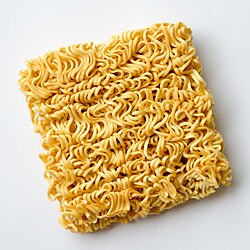
the list price of instant noodles may 2016 on the market - Instant noodles are a precooked and usually dried noodle block, sold with flavoring powder and/or seasoning oil, usually in a separate packet; though in the case of cup noodles the flavoring is often loose in the cup. Dried noodle blocks are cooked or soaked in boiling water; some instant noodle products are seal packed—these can be reheated or eaten straight from the packet. Instant noodles were invented by Momofuku Ando (born Go Pek-Hok) of Nissin Foods in Japan.[1] They were launched in 1958 under the brand name Chikin Ramen. In 1971, Nissin introduced Cup Noodles, a dried noodle block in a polystyrene cup.

The dried noodle block was originally created by flash frying cooked noodles, and this is still the main method used in Asian countries, though air-dried noodle blocks are favoured in Western countries. The main ingredients used in dried noodles are wheat flour, palm oil, and salt. Common ingredients in the flavoring powder are salt, monosodium glutamate, seasoning, and sugar. Instant noodles are marketed worldwide under several brand names.

Ramen, a Japanese noodle soup, sometimes used as a descriptor for instant noodle flavors by some Japanese instant noodle manufacturers (as Indomie use Mie goreng as a descriptor for their Mi goreng range), has become synonymous in America for all instant noodle products.


History


Instant noodles were invented by Taiwanese-Japanese inventor Momofuku Ando in Japan. It was first marketed on 25 August 1958 by Ando's company, Nissin, under the brand name Chikin Ramen.[3] Ando developed the production method of flash frying noodles after they had been made, creating the "instant" noodle. This dried the noodles and gave them a longer shelf life, even exceeding that of frozen noodles. Each noodle block was pre-seasoned and sold for 35 yen. Initially, due to its price and novelty, Chikin Ramen was considered a luxury item, as Japanese grocery stores typically sold fresh noodles for one-sixth their price.[4][5] Despite this, instant noodles eventually gained immense popularity, especially after being promoted by Mitsubishi Corporation.[6]

In 1971, Nissin introduced Nissin Cup Noodles, instant noodles in a polystyrene cup, to which boiling water is added to cook the noodles. A further innovation added dried vegetables to the cup, creating a complete instant soup dish.

According to a Japanese poll in the year 2000, "the Japanese believe that their best invention of the twentieth century was instant noodles."[7] As of 2010, approximately 95 billion servings of instant noodles are eaten worldwide every year. China consumes 42 billion packages of instant noodles per year – 44% of world consumption – Indonesia, 14 billion; Japan, 5.3 billion, Vietnam 4.8 billion, USA 4 billion. Per capita, South Koreans consume the greatest amount of instant noodles, 69 per capita per year

Production

The main ingredients in instant noodles are flour, starch, water, salt and/or a salt substitute known as kansui, a type of alkaline mineral water containing sodium carbonate and usually potassium carbonate, as well as sometimes a small amount of phosphoric acid.

Specific types of noodle can be made from a mix of wheat flour and other flour such as buckwheat. There are variations to the ingredients used depending on the country of origin in terms of the salt content and the flour content.

The noodle production starts with dissolving of the salt, starch, and flavoring in water to form a mixture which is then added to the flour. The dough is then left for a period of time to mature, then for even distribution of the ingredients and hydration of the particles in the dough, it is kneaded. After it is kneaded, the dough gets made into two sheets compounded into one single noodle belt by being put through two rotating rollers. This process is repeated to develop gluten more easily as the sheet is folded and passed through the rollers several times. This will create the stringy and chewy texture found in instant noodles. When the noodle belt is made to the desired thickness by adjusting the gap in the rolls, it is then cut right away. Wavy noodles are made in a slow paced conveyor belt and are hindered by metal weights when coming out of the slitter which gives the noodle its wavy appearance. If the strands are to be molded into other shapes, liquid seasoning could be added as well. Once the noodles are shaped, it is ready to be steamed for 1–5 minutes at 100 °C (212 °F) to improve its texture by gelatinizing the starch of the noodles.

Next, noodles can be dried in one of two ways: by frying or by hot air drying. Fried instant noodles are dried by oil frying for 1–2 minutes at a temperature of 140–160 °C (284–320 °F). The frying process decreases the moisture content from 30–50% to 2–5%. Common oils used for frying in North America consist of canola, cottonseed and palm oil mixtures, while only palm oil or palm olein are used in Asia. Air-dried noodles are dried for 30–40 minutes in hot air at a temperature of 70–90 °C (158–194 °F), resulting in a moisture content of 8–12%. The heat from either drying process will further add to the porous texture of the noodles by gelatinizing the starch even more. More than 80% of instant noodles are fried as it gives more evenly dried noodles than hot air drying which can cause an undesired texture in finished noodles, and also taking longer time to cook. However, with fried noodles, the oil content is about 15–20% and decreases the shelf life of the noodles due to oxidation whereas in hot air-dried noodles it has only 3% oil content maximum.

Before packaging with seasoning, the noodles are cooled after drying, and its quality of moisture, color, and shape are checked. Packaging of the noodles include films impermeable to air and water. There are two forms of packaged instant noodles, one in a bag with the provided seasoning in small sachets inside, or in a cup with seasoning on the top of the noodles. There are a variety of flavors to the noodles depending on which ones are added to the seasoning. Such flavors include beef, chicken, pork, shrimp, oriental, etc. In instant noodle cups, soy protein and dehydrated vegetables and meats are often added for further flavor.

The shelf life of instant noodles ranges from 4–12 months, depending on environmental factors. Their stability comes from the high sodium content with low moisture, and low water activity. Instant noodles can be served after 1–2 minutes in boiled water or soaked in hot water for 3–4 minutes.[9]


Health and safety concerns

Nutritional value
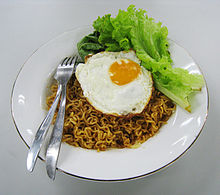
A serving of Indomie Mi goreng, with fried egg and vegetables. Instant noodles need additional ingredients such as egg and vegetables to add nutritional value.

Instant noodles are often criticized as unhealthy or junk food.[10] A single serving of instant noodles is high in carbohydrates and fat, but low in protein, fiber, vitamins and minerals.[11][12][13]
Sodium

Recent studies by the CDC and the National Academies Institute of Medicine call into question this assumption.[14] The CDC found that while Americans still consume too much salt, it is "no longer a significant health hazard", and that reducing salt below the recommended level could be hazardous to your health. The National Academies Institute of Medicine performed a 5-year study on nearly 29,000 participants, finding "no relationship between salt and a person's health", saying that consuming up to between 1 and 3 TSP has no adverse effects to health.[15] However, the study recognizes that further study on Sodium levels below 1 TSP would be necessary to conclude if levels below 1 TSP would reduce cardiovascular problems, but "The evidence on health outcomes is not consistent with efforts that encourage lowering of dietary sodium in the general population to 1,500 mg/day."[16]


Frying oil

Another concern regarding the consumption of fried foods, including instant noodles, is the possible presence of oxidation products, including acrylamides and aldehydes resulting from poor maintenance of the oil. If the cooking oil is not maintained at the proper temperature or changed as often as necessary (see gutter oil), these oxidation products accumulate toxins and are present in the foods.[17][18][19] Proper production standards are defined and promoted by World Instant Noodles Association to mitigate these risks after incidents of instant noodle contamination in developing Asia.

Lead

Lead contamination in Nestlé's Maggi brand instant noodles made headlines in India, some 7 times the allowed limit, with several Indian states banning the product as well as Nepal.[20] On June 5, 2015, Food Safety and Standards Authority of India (FSSAI) orders banned all nine approved variants of Maggi instant noodles from India, terming them "unsafe and hazardous" for human consumption".

Worldwide

Instant noodle is a popular food in many parts of the world, undergoing changes in flavor to fit local tastes.
Argentina

In Argentina instant noodles are gaining popularity and can be found in most major cities in supermarkets. The brand is usually Sapporo Ichiban. The Maruchan brand can also be found at Disco and Coto supermarkets. Due to the recent Chinese immigration wave, specialized Chinese supermarkets offer a wide variety of instant noodle brands.
Australia

The most popular manufacturer of instant noodle in Australia is San Remo Macaroni Company, whose Fantastic and Suimin brands hold a 30% market share.[22] Other brands include Indomie, Indomie Mi Goreng (fried Indonesian noodles served with or without broth), Maggi Noodles, Nissin's Demae Ramen, and Nongshim's Shin ramyun served with broth. Instant noodles are often referred to as "two-minute noodles" in Australia, a reflection of their preparation time.
Bangladesh

Maggi is the most popular brand of instant noodle in Bangladesh. Instant noodle is popular as snacks. They are often combined with eggs and seasonal vegetables.[citation needed]
Brazil
Brazilian instant noodles of the Maggi brand, being cooked

For a long time, the main manufacturer of instant noodle was Nissin Miojo, to the extent that, in Brazil, the most common name for them is "miojo", which is Nissin trademark. Manufacturers call them "lámen", from Japanese ramen. Many other companies, such as Maggi and Nestlé, also offer this product. There are many variants, such as "Lámen Cremoso", which has a creamy sauce, and "Lámen Hot", which includes pepper, as well as yakisoba and spaghetti.
Canada

Instant noodles were first introduced into Canada at least as early as 1974, with Ramen noodles as its Japanese originator. There are many brands available, including major brands from companies such as Nissin Foods, Sapporo Ichiban, Mr. Noodles, Nongshim, and Knorr. In some areas, these noodles are referred to simply by their brand names, though they are predominantly referred to as "instant noodles". These brand-name packages generally only contain one flavoring pouch. Some brands, mostly more expensive Korean, Japanese, Chinese and Thai brands, include more flavoring and separate packets for dried vegetables, flavoring contained in oil, and pepper, in addition to the soup stock. Korean brands such as Nongshim are readily available in most large grocery stores, and in some major cities, brands imported from Europe are also available.

In larger grocery stores and Asian markets in larger cities, a large variety of brands and international flavors can be found, including noodles from such places as Thailand, Indonesia, and India. Instant noodles from Grace, a Caribbean food company, are available in some places. Due to the large South Asian population in some major cities, Maggi is also a popular brand. Product formats include regular plastic wrapping and in various foam food containers.
China
A bowl of Chinese Toon Veggie Noodles issued by Weichuan (味全) Food Industries
A packet of Master Kong (康師傅) instant noodles

The market is focusing on higher-end products, generally costing more than 1 RMB. The top three brands in this category dominate more than 85% of the market; for the lower end, those costing less than 1 RMB, the leading five brands hold about 60% of the market share. The dominant brands in the Chinese market are:

    Ting Yi (aka Master Kong or Kang-shi-fu, 康師傅), owned by the Taiwanese Tingyi (Cayman Islands) Holding Corporation and managed with a Japanese strategic alliance partner Sanyo Food, the third-largest player in the Japanese market. Master Kong is the largest brand, with a business scope extending to beverages (RTD) and bakeries.
    Uni-President (aka President or Tong-Yi, 統一), a PLC listed in Taiwan. Like Master Kong, it once had its own businesses in beverages and bakeries. However, the company recently formed a JV partnership with Hwa-Long and Nissin to distribute beverages. Uni-President's home market is Taiwan, but the company is now expanding aggressively in mainland China.
    Hwa-Long (華龍, i.e. Chinese Dragon), a local company allied with Nissin. Because of that relationship, Hwa-long has long been regarded as Nissin's agent in the world's largest consumer market. Recently Hwa-long, Nissin, and Uni-President formed a partnership in the beverage business in order to collectively compete against Master Kong.
    Bai-xiang (白象, i.e. White Elephant), a local company spin-off based on a former state-owned enterprise, which still enjoys a strong local customer base. It is a leading brand in terms of volume, and its products fall into the lower price range.

In Q3 2014, instant noodles sales declined by 9.1 percent year-on-year, due to some of lower-income migrant workers shifted to more quality instant noodles from Korea, while Chinese instant noodle companies lured the consumers with more cheaper instant noodles. 40 billion packets of instant noodles sold annually in China with about half portion of world's consume a year. In year 2010, only 10 percent of instant noodle companies still exist, compared to a decade ago.[23]
Denmark

Virtually all supermarkets sell instant noodles of some sort, but they tend to be Westernized and come in foam containers, costing upwards of 5 kroner. Ethnic stores and specialty shops offer the most popular alternative, Yum Yum, whose prices range from 3–4 kroner; "3 for 10" offers are nearly universal. Its popularity has been sufficient to become a generic brand name. Mama, another brand from Thailand, is the second most popular Eastern brand but has a much smaller market share. Wai Wai, a brand from Nepal, is also available. Most Danish supermarket instant noodles contain MSG as a flavor enhancer.
Germany

Instant soups have a long tradition in Germany, back to the 19th century, with, for example, the inventions of Justus von Liebig, or Maggi products. Instant noodles as discussed here, however, were relatively unknown in Germany until the 1990s, but they have since continually gained in popularity.

There are two types of ramen in Germany: the first, generally called "Instant-Nudeln" (instant noodles), tends to be a mild, Westernized version and comes in flavors such as chicken, vegetable, beef and button mushroom. The second type is called "Ramen" and is quite similar to traditional ramen as it is known in Asia. German "Ramen" was originally considered an ethnic food and was only available in specialty stores. Since the mid-1990s, it has become available at German supermarkets. The most popular brands are Yum Yum, Thai Chef, Nissin Cup Noodles, and Maggi.
Hong Kong

Cantonese people have a long history of cooking yi mein, a noodle invented in the Qing Dynasty. Modern instant noodles were publicly introduced as "Doll Noodles" in the late 1960s by Winner Food Products Ltd, which was bought by Nissin in 1984. That term has since become a synonym for instant noodles irrespective of brands in Hong Kong and it is usually taken as a derogatory term for poor, busy and/or unhealthy lifestyle but these noodles have become a part of daily life in Hong Kong.

Most supermarkets offer a vast range of choices, including brands from many different countries. Common brands include Shin Ramyun of South Korea, Nissin and Demae Itcho of Japan, Sau Tao of Hong Kong, Indomie of Indonesia, Koka of Singapore and Mama of Thailand. Besides instant wheat noodles, supermarkets also sell instant rice noodles and Cantonese egg noodles. Premium instant noodles can also be found. Some of them are priced at more than HK$20 a pack.

Some noodles are also marketed as a snack which need not to be cooked; consumers ingest the noodles directly out of the packaging similar to crisps. The most common brand for this is Fuku and Baby Star.
Hungary

Hungary is 43d in the world in the consumption of instant noodles according to the World Instant Noodles Association (WINA), having consumed 20 million packages/cups of noodles in 2014.[24]

Thai President Foods, manufacturer of MAMA noodles, opened an instant noodles factory in Hungary in 2013. The Hungarian factory's two production lines have a capacity of 4.5 million noodle packs per shift per month. It produces "Thai Chef" and "Asia Gold" brand noodles for the European market.[25]:33
India
A packet of Maggi instant noodles.
A packet of Ching's Secret instant noodles from India.

The most popular brand in India is Nestlé's Maggi which is promoted as a "two-minute noodle". On June 5, 2015, Food Safety and Standards Authority of India (FSSAI) banned all nine approved variants of Maggi instant noodles from India, terming them "unsafe and hazardous" for human consumption.[21] Although in November 2015, Maggi instant noodles made a return in the Indian market after the ban was lifted.[26]

Other popular brands include Top Ramen Smoodles and Cup Noodles manufactured by Indo-Nissin Ltd, Ching's Instant Noodles, Joymee Masala Noodles, AA Nutritions's Yummy, and Wai-Wai, owned by the Chaudhary Group from Nepal. Smith & Jones, Ching's secrets, Tai Pai Noodles & NE Time noodles (Maruti quality Foods Products Pvt. Ltd) are also popular new brands of instant noodles in India. Wai Wai is gaining momentum in North Eastern states, Sikkim and west Bengal.

Local flavors such as masala and chicken tikka dominate. The most popular flavor of Top Ramen is known as "Curry Smoodles"; its flavorings mimic a basic curry, including onion, garlic, coriander, and a curry masala. A package sells for 18 rupees in India. In India, there is also great demand for unflavored instant noodles; brands such as Bambino and Ching's dominate the market.

Ching's and Smith and Jones are brand of Capital Foods Ltd., (Masala, Curry, Chicken Masala under Smith and Jones brand and Ching's Flavor are Manchurian, Schezwan, Hot Garlic and Chicken Roast Garlic).

ITC launched its Yippee noodle under Sunfeast Brand.

Because of increasing health consciousness, Nestle introduced an instant noodle based on whole wheat grain flour, called Atta Noodles. Instant rice noodles are also available in various flavors. However, Nestle's original "Maggi" masala flavored noodles continue to be the most successful brand of instant noodles not only in India but in the United States for Indian Americans, as well. Nestle also has a '2-minute cup noodles' type of maggi known as 'cuppamania', which involves pouring hot water into the prepackaged cup and leaving it to soak and cook.

Foodles, a new instant noodle brand was launched in late 2010, focusing on health issues, with the tagline, ' Noodles without the No '. This range has significantly higher nutrition values compared to other popular brands.[citation needed] It comes in both Multi-grain and Wheat-only forms. The brand is owned by Horlicks.
Indonesia
A box of Indomie Mie goreng

With production peaking at 14.5 billion packs in 2011, Indonesia is the second largest producer of instant noodle after China which produces 42.5 billion packs a year.[27] An early instant noodle in Indonesia was "Supermi", introduced in the 1970s by Indofood Sukses Makmur, the largest instant noodle producer in the world. It later introduced two additional brands – "Indomie" and "Sarimi".

Currently, Indofood Sukses Makmur has a market share of about 70% of Indonesian instant noodle production. In 1999, the figure was about 90%; their market share declined following the introduction of "Mie Sedaap" by Wings Food in 2003.

Indonesians prefer noodles with a strong flavor. Popular flavors of Indonesian instant noodle include Chicken curry, Onion and Chicken, Bakso (beef meatball), Mie Goreng and Chicken Soto, a traditional Indonesian chicken soup. In the past, Indomie tried to produce 30 different flavors to reflect various traditional dishes of Indonesian cuisine, but the product line was discontinued after disappointing results with only several popular variants remain in production. Strong local preferences contribute to the low volume of sales of Japanese and other foreign instant noodles in Indonesia; hot and spicy Korean noodles appeal most to these tastes and have the largest market share among foreign instant noodles.

Most of the market share is owned by the product Indomie Mi goreng, A dry instant noodle meant to replicate the traditional Indonesian dish Mie goreng, or fried noodles. Other variants of popular instant noodles in Indonesia includes Mie Gelas, which is sized so it could be served in a drinking glass, and Pop Mie, which is similar to Cup Noodles.

Although originally targeted for family at home as a simple ready to cook hot meal, today in Indonesia instant noodles are also sold in warung (simple shop) commonly called warung indomie, despite the brand served there not always Indomie, and also in convenience stores. Indonesians tends to add additional ingredients to instant noodles to improve its nutritional value and taste. Simple boiled Chinese green cabbage, boiled or fried egg, corned beef, bottled sambal chili sauce, pepper and fried shallots might be added.
Japan

Japan is the country of origin of instant noodles. Instant noodles remain a "national" light food. The average Japanese person eats 40 packs of instant noodles per year.[8]

After their invention by Momofuku Andō in 1958, instant noodles became very common in Japan. In the 1970s, makers expanded their flavors to include such examples as shio (salt ramen), miso, or curry. Beginning in the 1980s, makers also added dried toppings such as shrimp, pork, or eggs. Today, instant noodles are divided into two groups: "traditional" cheap (¥100 to ¥200) noodles with few toppings and expensive (¥200 to ¥350) noodles with many toppings, which are often packed into a pouch. Various kinds of instant noodles are produced, including ramen, udon, soba, yakisoba, and pasta.

Major makers in Japan are:

    Nissin Food Products 日清食品, whose products include Chicken Ramen and Cup Noodles, has a 40.4% market share As of 2005.
    Tōyō Suisan 東洋水産, under the brand name Maruchan, whose products include Akai Kitsune and Midori no Tanuki, has a 19.2% market share.
    Sanyō Foods サンヨー食品, Sapporo Ichiban, has an 11.5% market share.
    Myōjō Foods 明星食品, Charumera, has a 9.9% market share.
    Acecook エースコック, Super Cup, has an 8.3% market share.

Korea

In South Korea, instant noodles were first produced by Samyang Food in 1963 under technical assistance from Myojo Foods Co., Japan which provided manufacturing equipment.[28][29][30] Its quick and easy preparation and cheap price made it quickly popular. In South Korea, instant noodles are more common than non-instant noodles; the word ramyeon (Korean: 라면), generally means the instant kind. Most South Korean food stalls make instant ramyeon and add toppings for their customers.

Ramyeon is typically spicy. Shin Ramyun (신[辛], literally "spicy") is the best-selling brand in South Korea.[31] It has also become popular in China and the United States. The leading manufacturer of ramyeon in South Korea is the Nong Shim ([農心], literally "Farmer Heart") company, which exports many of its products overseas.

In 2004, over 600,000 boxes of Shin brand Ramyeon were sent to North Korea as part of the aid relief program when Ryongchŏn train station exploded, injuring many North Korean civilians. However, insider sources state that most of it was sold in North Korean black markets, making its way to Pyongyang, instead of distributed as aid. North Korean visitors to China also frequently purchase South Korean ramyeon from Chinese stores, where Shin Ramyeon is known as "Korean Tangmi Ramyeon".

Indigenous production of Ramyeon in North Korea began in 2000. The first Ramyeon brand was "kkoburang guksu", which literally means curly noodles in Korean. Later, a joint venture by North Korean and Hong Kong-based companies began producing "jŭksŏk guksu" (Korean: 즉석 국수), which literally means "instant noodles". Ramyŏn are popular among North Korean elites who live in Pyongyang and Nampo. In contrast to hot and spicy South Korean Ramyeon, North Korean Ramyŏn has a much milder and brothier flavor.[32]
Malaysia, Singapore and Brunei
Vegetables and eggs with instant noodles

Maggi has practically become synonymous with instant noodles. Popular flavors include curry, chicken, tom yum, and asam laksa. Both soup-based and dry variants are readily available. Indomie, Nissin, Cintan and Mamee brands of instant noodles are also well loved by Malaysians, Singaporeans and Bruneians.

Though instant noodles are usually eaten at home, they are also becoming increasingly popular as restaurant or cafe meals, especially in Hong Kong-themed "cha chan teng" cafes and "Mamak" food shops. These meals are usually modified according to the chef's taste and include minimal monosodium glutamate.

In recent years, instant noodles manufacturers have tried to introduce low-MSG seasonings, as well as new processes that do not require frying for the noodles, and have introduced new flavors such as chilli crab and seafood.
Mauritius

The Apollo (brand name) noodle is very popular in Mauritius. Popular flavors include shrimp, curry, chicken and vegetable. This Mauritian brand is today also widely available in some Western markets like France.
Mexico

Instant noodles are very popular in Mexico, where they are often viewed as a snack-grade food. Flavors such as lime and chili are popular, often combined with shrimp. It is available in every grocery store and convenience store through all the country. This kind of soup was introduced in the 1980s by the Maggi Corporation as "Instant Maggi Ramen", marketed in a small plastic bag with artificial flavors, but it did not become popular until cup noodles were introduced in 1990 by Maruchan. Due to this popularity, the instant noodles are often referred to simply as "Maruchan". Today, many local brands such as "La Moderna" and "Herdez" have developed their own cup noodles, along Nissin, which is also a newcomer. In the early 2000s, Maggi introduced four instant noodles flavors, like tomato pasta or chicken with green tomatoes, but they were soon discontinued.
Nepal
Packet of Wai Wai Quick Chicken Pizza of Nepal

Instant noodles are famous in Nepal. In the early 1980s, Gandaki Noodles (P.) Ltd.[33] of Pokhara city, introduced Rara, a white instant noodles named after the largest lake of Nepal. It was a fair success among urban population. Then in around 1985, Chaudhary Groups(CG)[34] entered the market with Wai Wai. Wai-Wai noodles, a brown, spicy and precooked noodle, became a big hit among the people.[35] Over the years, its popularity has grown heavily and consist of a major part of the dry foods sold in Nepal and are available in any part of the country. The Quality control office of Nepal withheld Nepal quality marks for wai wai in 2012.[36]

    Wai-Wai noodles, Golmol produced by CG.[37] Wai Wai is popular in India too. CG has established its factories in India.
    Mayos, Ru-Chee, Hurray produced by Himalayan Snax & Noodles Pvt. Ltd. (HSNPL)[38]
    2pm, Rumpum by Asian Thai Foods Pvt. Ltd. (ATF)[39]
    ABC, Muskan, Hits, Halchal, Baby by Smart Food and Snacks Pvt. Ltd. (SFS)[40]

New Zealand

New Zealand is home to a large aboriginal Maori and Polynesians population, the largest majority group in the country, which has generated Polynesians community nationwide. Various brands of instant noodle from Australia like Maggi, Trident, and Fantastic are sold through both these ethnic outlets and mainstream super-hypermarkets, including Yum Yum and Indomie Mi Goreng
Nigeria

Since its introduction in 1988, Indomie is the most popular instant noodle brand in Nigeria.[41] Instant noodle brands are now eaten in most households across the country.[42] By 2008, nine other brands of noodle had appeared on the market. Affirming Indomie's hold on the market, Christopher Ezendu, a distributor at the popular Oke-Arin market on Lagos Island, reported that these other brands are aspiring to be like the market leader.[43] In 2013 a wholly owned and managed Nigerian company based in Abuja, Royal Mills and Foods limited, launched a new brand of instant noodle, De-Royal Instant Noodles with two flavors (chicken and onion chicken), in Nigeria.[44]

According to the World Instant Noodle Association, Nigeria was the 13th largest consumer of instant noodle in the world in 2007.[45]
Pakistan

Instant noodle is not a traditional part of Pakistani cuisine, but it showed rapid growth over the review period and became very popular because it is easy to prepare within minutes. Due to the busy lives of urban consumers, they prefer a quick and convenient meal which was provided by noodles. It continued to become popular among children and the younger generation as a mini meal with many flavors such as masala and chicken.[46] There are three challenging brands of instant noodles in Pakistan.[47] Nestlé's Maggi which was the first brand to enter market in 1992, followed by Knorr of Unilever in 1993 and in 2012 Shan Food Industries introduced Shoop.[48] Knorr is leader with 55% market share and that of Maggi is 45%.[47] Maggi Noodles are available in six flavors: Chicken, Chatkhara, Masala, Lemon Chaska, Karara and Bar-B-Q.[49] In 2011, Knorr launched Soupy Noodles, along with two other variants, Chicken Delite and Mast Masala. Knorr Noodles have become the brand of choice for kids over the years.[50]
Peru

In Peru, Aji-no-men brand ramen had been the only brand sold for a long time. Recently, Maruchan and Nisin ramen became available too, in a wide range of flavors, including beef, chicken, chicken with greens, hen, spicy hen, creole-style hen, shrimp, and oriental-style.
Philippines

There are many local and imported brands of instant noodle in the Philippines, which are locally known as "instant mami" (after a Philippine version of chicken noodle soup). Brands available in the Philippines include Lucky Me, Payless, Nissin, QuickChow, Maggi and Ho-Mi. They are sold in packets, sealed paper cups, or sealed foam food containers. Instant noodles are popular as a quick snack or for breakfast because of their fast preparation and affordability.

People sometimes add a fresh egg directly into the instant noodle either in the pot or the bowl. Another popular variation is the instant pancit canton, stir-fried noodle which is boiled and drained to which a flavoring powder, soy sauce, oil and carrot and celery pieces are added. Popular variations include spicy, soy-sauce-calamansi, and sweet-spicy.
Poland

Instant noodles began appearing on Polish store shelves during the early 1990s. Despite being called "Chinese soup", the first brands on the market were produced in Vietnam and had a somewhat spicy, garlic-flavored taste. The noodle packages contained pouches of flavored soup base, spicy oil, dried vegetables or even minuscule shrimps.

The product gained particular popularity among students due to its affordability and convenience. "Kaczka łagodna" (Mild duck), "Kurczakowa łagodna" (Mild chicken) and "Krewetkowa ostra" (Spicy shrimp) were the most common flavors. Today, the local Kim Lan and worldwide Knorr brands offer varieties ranging from cheese-and-herb flavored noodles to local Polish specialties like barszcz czerwony or żurek.

Ngoc Tu Tao, who emigrated to Poland from Vietnam and established the Tan-Viet Group in 1990, is credited with introducing the instant noodle to Poland. His VIFON brand holds a 35% share of the Polish instant soup market, selling over 100 million packages a year. Ngoc Tu Tao has appeared in Wprost magazine's annual ranking of the 100 most wealthy Polish citizens.[51]

Inexpensive supermarket private-label brands and regular midmarket products do not differ much in taste, while their prices can range from PLN 0.8 to PLN 2.00. Noodles packaged in foam bowls are slightly more expensive, priced from PLN 4.00 to PLN 8-9.
Russia

Russia's most popular instant ramen are the local brand Rollton and the Korean brand Dosirac (Korean for "lunch box"). Instant noodles have been popular in Russia's Far East region since the late 1980s and made their way west in the early 1990s. In Russia, like most noodle products, they are still considered a lesser-quality option to turn to in lean economic times. They are popular among college students and homeless as a regular meal.[52]
South Africa

Instant noodles have become commonplace in South Africa since the 1990s, when they were first introduced to the general consumer market. While various brands are available, the most common is Maggi 2 Minute Noodles. Because of their low cost, instant noodles are popular in South Africa's poorer communities. They are also popular among students and office workers as a quick snack. In South Africa the term "Ramen" is not used to describe Instant Noodles but rather the traditionally thicker noodles used in authentic Japanese cuisine.
Sweden

Instant noodles have been widely available in Swedish supermarkets for more than 10 years and are very popular, especially among students. The most common brands include Nissin's Demae Ramen, Samyang, Euroshopper, Eldorado and ICA. Other brands include Mr. Cup cup noodles and Little Cook. Cup noodles are usually sold for 10 SEK per package, while packet noodles are usually sold at 4 for 15, 5 for 20 or 6 for 30.
Taiwan

Instant noodle inventor Momofuku Ando was born in Taiwan. According to statistics from the International Ramen Manufacturers Association, Taiwan is the world's 12th largest instant noodle market, with an annual NT$10 billion (US$300 million) in sales. This translates into an annual total of 900 million packs, or 40 per person.[53] Uni-President (aka President or Tong-Yi, 統一) takes the largest market share of instant noodles in the country, and is a major player in the global instant noodle market.

Major makers in Taiwan are:

    Uni-President (aka President or Tong-Yi, 統一) is the first instant noodle maker in Taiwan. Its first and most famous product is Rouzaomian (肉燥麵). Uni-president has the greatest market share in Taiwan and is also one of the largest instant noodle makers in Mainland China.
    VEDAN (味丹; Pinyin: Wei Dan)
    Wei Lih (維力) is famous for its Zhajiangmian (炸醬麵).
    Ting Yi (aka Master Kong or Kang-shi-fu, 康師傅) is also the biggest instant noodle maker in Mainland China.
    Ve Wong (味王; Pinyin: Wei Wang)

Thailand
Phat mama (stir-fried instant noodles) is a popular dish in Thailand

"MAMA" (Thai: มาม่า) brand noodles is the leader of Thailand's instant-noodle industry. MAMA got its start in 1972 as a joint venture between Taiwan's President Enterprise and Thailand's Saha Pathanapibul PLC.[54] In 2016, there are three well-known brands of instant noodles, "Yum Yum", "Wai Wai", and "MAMA". "MAMA" controls about half the market.[54] Tom Yum Shrimp is the best selling flavor. Thais call instant noodles "Mama", now a generic term in Thailand. Thais consume an average of 45 packs of noodles per person per year, fourth in the world after Indonesia, Vietnam, and Malaysia.[25]:29

Due to their ubiquity, instant noodles were chosen as a vehicle for dietary fortification by a joint effort of the Federation of Thai Industries, instant noodle producers, and the Ministry of Public Health about 10 years ago. The vitamins and minerals added are iron, iodine, and vitamin A.[55][56]

Unlike Japanese or Malaysian instant noodles, Mama noodles are often used to cook different dishes using only the noodles, leaving out the seasoning. The typical method of cooking is by adding boiled water, but Thais typically add meat, pork, chicken or egg to spice up the instant noodles. Sometimes they will cook the noodles and combine the noodles in a dish called a noodle salad known as "yum Mama". This dish is often prepared with meat balls, tomatoes, onions, and lettuce. Another method is to stir fry the cooked noodles with pork, chicken, eggs, and vegetables to give the noodles extra flavor. They are sometimes consumed directly as a snack without further cooking by crushing the noodles in the packet, adding seasoning powder in the packet and shaking the packet to coat the crushed dried noodles evenly with the seasoning. Instant noodle products have become successful in Thailand, because they are cheap, easy to eat, can be easily found, and offer a range of flavors. Recently some brands of instant noodles include real dehydrated meat such as pork or beef. The average retail price is about six baht for the regular size[54] and 10 baht for Yum Yum Jumbo packs.[citation needed]

For years, sales of MAMA noodles was considered a barometer of the Thai economy, with consumption rising when times were lean. This has not been the case recently. In 2014, when the political crisis slowed Thailand's economic growth to 0.9 percent and eventually led to a military coup, the growth of MAMA noodle sales hit a low of one percent. In 2015, when the military government could not lift the country beyond an estimated 2.8 percent growth, sales of MAMA noodles only grew 0.4 percent—a record low. Saha Pathanapibul's vice-president, Vathit Chokwatana, attributed the poor sales to falling commodity prices, which have weakened the purchasing power of rural people.[54]
The Netherlands

The Netherlands is home to a large Indonesian community, the largest minority group in the country, which has generated Indonesian supermarkets known as Toko. Various brands of instant noodle are sold through both these outlets and non-specialty supermarkets, including Saimin, Indomie Mi Goreng, Maggi, Thai varieties such as Mama and Yum Yum, and some more western alternatives, such as Conimex and Good Noodles by Unox. Both cup and packet varieties are available.
Ukraine

Instant noodles have been quite popular in Ukraine in the past 10 years because they are cheap and save time. Mivina noodles can be cooked as soup or eaten dry; dry instant noodles are as popular in Ukraine as potato chips and croutons. Mivina is rivaled by the Russian Rollton, which also produces instant noodles for quick soups.
United Kingdom

A common form of instant noodles in Britain is Pot Noodle, a cup noodle first marketed by Golden Wonder in the late 1970s, and acquired by Unilever in 1995. These use artificial flavorings and are generally suitable for vegetarians (there is no chicken in Chicken Pot Noodles, for example) and are sold by virtually every major supermarket chain, general groceries shops, and convenience stores. Boiling water is added to the noodles to cook them.

Packet noodles such as Batchelors' Super Noodles are also sold. Several of the larger supermarkets sell eastern brands such as Nissin, Koka noodles and Shin Ramyun, which once could only be found in Asian groceries. Larger retail chains may offer their own brand in basic packaging and a variety of flavors, e.g. Asda, while noodles such as Maggi can also be found in many groceries, but are less widespread.

Unlike in North America, the term ramen is not used in this context; ramen in the UK would generally only refer to the original Japanese cuisine.

United States

In the United States, instant noodles were first available by Nissin Foods in 1971. In 1972, Nissin Foods introduced "Nissin Cup Noodles" in a foam food cup, which led to an upsurge in popularity. Soon after, many other competing companies were offering similar instant noodle products.

Today, in the U.S., the instant noodle is commonly known as ramen, after the Japanese dish on which it was originally based, and it comes in a variety of mostly meat-based flavors. The three major brands are Nissin Top Ramen (originally Top Ramen's Oodles of Noodles), Maruchan Ramen, and Sapporo Ichiban. A wide range of popular brands imported from other countries are available at many Asian grocery stores and some supermarkets. Instant ramen noodles are extremely popular among students and other people of low income, due to their ease of preparation and unusually low cost. While price varies throughout the U.S., generally several packages can be purchased for 25 cents or less.
Vietnam
The instant noodle aisle in a supermarket at the Saigon Tax Trade Center, Ho Chi Minh City, Vietnam

Instant noodles are popular in Vietnam, where they are often eaten as a breakfast food. Both wheat and rice noodles are common. Acecook Vietnam, Masan Food and AsiaFoods are leading producers of instant noodles.[57] Popular Vietnamese instant noodle soups include Oriental, Bánh đa cua, Bún bò Huế flavored, Phở, and Hủ tiếu Nam Vang, a Phnom Penh-style noodle.

With the information we provide about the list price of instant noodles may 2016 on the market

, We hope you can be helped and hopefully set a precedent with you . Or also you can see our other references are also others which are not less good about How do I create a dynamic ad in Power Editor?

, So and we thank you for visiting.
open contoh marketing : https://en.wikipedia.org/wiki/Instant_noodle

How do I create a dynamic ad in Power Editor?

How do I create a dynamic ad in Power Editor?

marketing,marketing mix,integrated marketing communications,word of mouth marketing,integrated marketing,marketing news,sports marketing,buzz marketing,niche marketing,guerilla marketing
How do I create a dynamic ad in Power Editor?

the example create ads using English - Before you proceed, verify that you have already uploaded a product catalog and have modified the Facebook pixel on your website or App Events in your app.

    From Power Editor, create a new campaign with the objective Product Catalog Sales

    Create a new ad set for that campaign and give it a name.
    Create a product set. You can advertise all products from your product catalog or you can select the set of products that you want to advertise. For example, if you want to create a product set of shoes, select the category that contains "Shoes". The filter matches the column names and products from your product catalog.

    Click Create to save your product set.
    Select the audience and the targeting window in which you’d like to target your ads. For example, you can set your targeting window to people who have viewed at least one product or added a product to cart in the past 7 days but have not yet made a purchase. Click ‘Create’ to save your product set.

    You can also layer on additional audiences, such as a Custom Audience or demographic targeting by clicking Edit Audience. For example, you can exclude a Custom Audience of people who have purchased offline or in store. Keep in mind that adding more targeting will greatly reduce the reach of your ads and decrease performance.
    Create a new ad using your existing ad set.
    Choose whether one product or multiple products should be shown per ad. When you choose to show multiple products, Facebook will show a mix of last products seen or highly relevant items from the selected product set.

    Note: Your images should be 600 x 600.
    Configure your ad with plain text and keywords. Keywords are pulled directly from your product catalog.
    Preview how your ads will appear by scrolling through the product previews. Product previews are randomly pulled from the product set. Notice how the keywords change according to the products being viewed.
    Make sure to track conversions for your ads. For a complete view of your ads’ effectiveness, track both website purchases and in-app purchases.

        Track website conversions from your dynamic ads. The Facebook pixel can be used for tracking conversions across all devices utilizing Standard Events. For details on conversion tracking using the Facebook pixel, please visit our developer site.
        If you have a mobile app, make sure you are set up to track purchases that take place within your app. Detailed information for creating App Events, including tracking purchases, can be found in our developer site.
    Click Review Changes to publish your ads. Your dynamic ads will begin delivering as soon as people begin browsing products that match the rules that you have configured.

With the information we provide about the example create ads using English

, We hope you can be helped and hopefully set a precedent with you . Or also you can see our other references are also others which are not less good about Culinary Jobs On Cruise Ships

, So and we thank you for visiting.
open contoh marketing : https://web.facebook.com/business/help/1577598505812743?_rdr

Culinary Jobs On Cruise Ships

Culinary Jobs On Cruise Ships

marketing,marketing mix,integrated marketing communications,word of mouth marketing,integrated marketing,marketing news,sports marketing,buzz marketing,niche marketing,guerilla marketing
Culinary Jobs On Cruise Ships

How to promote the five-star restaurant in English - Register for Cruise Ship Culinary Jobs Now!


There are dozens of jobs in the galley (kitchen), many of which require extensive prior restaurant or cruise ship experience. The galley is usually divided into the hot galley and cold galley. The hot galley positions include all types of cooking - vegetables, fish, soup, and grill. The cold galley positions include baking, pastry, and buffets. Cruise ship Culinary jobs

With all of this food preparation and dining, there has to be a team responsible for cleaning up after the passengers and cooks. A cleaning crew (utility division) washes all of the dishes and tableware (including the pots and pans), changes the table cloths, vacuums the floors, and cleans the windows and bar areas. In general the galley department offers the following cruise ship jobs: Executive Chef / Chef De Cuisine, Executive Sous Chef, Sous Chef, Chef De Partie, Demi Chef De partie, Commis 1 (First Cook), Commis 2 (Second Cook), Commis 3 (Third Cook), Cook Trainee, Crew Cook / Crew Cook Assistant / Crew Cook Trainee, Crew Cook Utility / Crew Messman, Provision Master/ Storekeeper, Assistant Provision Master/ Storekeeper, Pastry Chef , Assistant Pastry Chef, Pastry Man, Pastry Trainee, Baker Supervisor, Baker Trainee, Galley Steward / Galley Cleaner, Dishwasher / Pot Washer. Read below the various Chef job descriptions and salary ranges.

Executive Chef

The Executive Chef is responsible for the entire galley staff, food planning, quality control, directs all the culinary and associated activities throughout the vessel either personally or through subordinate managers and supervisors. He/ she reports to the ship's Food and Beverage Manager and...
Executive Sous Chef

Job description: responsible for the day to day operations of the galley staff, assisting the Executive Chef with the food planning, preparation and quality control. He/ she communicates with the Executive Chef on daily basis, reviews menus to estimate food and time requirements. He/ she meets with the Sous Chef to review guest comments to implement revisions and improvements. The Executive Sous Chef manages the financial aspects of the assigned food operation, prepares a variety of reports and letters utilizing personal computer system and equipment. He/ she trains and monitors all levels of cooks and chefs for proper skill and service. She/he collaborates with the Executive Chef to plan menu requirements, serving arrangements, guest comments and other related details and also collaborates with the Provision Master to ensure the highest quality, delivery and storage of all food items. Cruise Ship Executive Sous Chef Job Requirements: five to seven years in subordinate position on board and/or 4-5 star hotels, restaurants or high volume food service facilities. Managerial experience required. Must posses the ability to manage international staff in a positive and productive manner. Must speak English clearly and distinctly, write and read English in order to understand written procedures, give and receive instructions in written and verbal forms. Approved certification or culinary school degree-granting program completion required. Executive Sous Chef salary range: $3800-6500 U.S. per month, depending on the cruise line. Possibilities for promotion to Executive Chef position.
Sous Chef

Job description: the Sous Chef is responsible for the day to day operations of the galley staff, assisting the Executive Chef with the food planning, preparation and quality control. The Sous Chef Manages and coordinates activities of various workstations engaged in preparing, timing and cooking. He/ she reviews food requisitions from the various workstations and forwards to Executive Sous Chef for final approval. The Sous Chef monitors the assignment of duties and responsibilities to employees. He/ she observes and evaluates employees and work procedures to ensure quality standards and services are met. The Sous Chef manages the financial aspects of the assigned food operation, prepares a variety of reports and letters utilizing personal computer system and equipment. Trains and monitors all levels of cooks and chefs for proper skill and service. The Sous Chef recommends measures to improve work procedures and employee performance to increase quality of food and job safety. Sous Chef Job Requirements: five to seven years in subordinate position on board and/or 4-5 star hotels, restaurants or high volume food service facilities. Must speak English clearly and distinctly, write and read English in order to understand written procedures, give and receive instructions in written and verbal forms. Ability to read, interpret and demonstrate the preparation of recipes for all basic meat, fish, sauce and side dishes. The demonstration includes advanced cooking methods such as braise, sauté, broil and grill and the use of a variety of knifes to slice, dice, chop, julienne, etc. Approved certification or culinary school degree-granting program completion required. Cruise Ship Sous Chef salary range: $3400-5800 U.S. per month, depending on the cruise line. Possibilities for promotion from Sous Chef to Executive Sous Chef position.
Chef De Partie

Job description: the Chef De Partie is a senior middle-management level position aboard a cruise ship. The Chef De Partie prepares and produced gourmet cuisine and sauces, manages food displays on buffets and in restaurants. He/ she meets on daily basis with the Sous Chef to review the requirements of the day’s meals and time frames for restaurant service as well as supervises the assigned workstation function. The Chef De Partie assigns duties and responsibilities to employees. He/ she is fully responsible for organizing work schedule and controlling over time of assigned section. The Chef De Partie trains and monitors entry level cooks and Chefs for proper service and conducts documented training of Commis and Demi Chef De Partie in operating, cleaning and maintaining machinery and tools. The Chef De Partie monitors, supervises and test foods being cooked and attends daily food tasting per the Executive Chefs instructions. Chef De Partie Job Requirements: three to five years experience cooking and preparing food in a 4 or 5-star hotel, restaurant or high volume food service facility required. Good English Language skills required. Culinary school education required. Cruise Ship Chef De Partie salary range: $3200-4600 U.S. per month, depending on the cruise line. Possibilities for promotion to Sous Chef position.
Demi Chef De Partie

Job description: the Demi Chef de Partie is responsible to assist the Station Head or Sous Chef in contributing to the overall success of the assigned station. He/ she meets with the assigned station-head, the Chef de Partie or Sous Chef on daily basis to review the requirements of the meals and time frames for restaurant service. The Demi Chef de Partie knows and operates all equipment according to standard operating procedures. He/she performs multitask activities in food preparation including setting up of mis en place for daily menu requirement as well as ensures that all food on plates is correctly portioned and served uniformly. The Demi Chef de Partie must be able to explain menu ingredients and preparation techniques when working buffet areas. Demi Chef De Partie Job Requirements: minimum two years experience cooking and preparing food in a 4 or 5-star hotel, restaurant or high volume food service facility required. Good English language skills required. Culinary school education required. Cruise Ship Demi Chef De Partie salary range: $2700-3700 U.S. per month, depending on the cruise line. Possibilities for promotion from Demi Chef de Partie to Chef De Partie position.
Culinary Administrative Assistant

Job description: the Culinary Administrative Assistant is a two stripe officer acting as a secretary and providing administrative work to the Executive Chef and Galley management, such as checking and answering emails, posting notices, composing routine letters and correspondence, printing out ratings reports and comment cards, scheduling appointments, maintaining filing systems, distribute emails and fax messages as required. The Culinary Administrative Assistant works in close cooperation with the Crew Purser’s office to familiarize new crew members with their assigned accommodations, uniform shop, crew laundry and other facilities onboard the cruise ship. She/ he operates computer equipment, software and printer to perform necessary word processing functions and utilizes spreadsheet software packages for basic mathematical formulas and graphic presentation of information. Facilitates, schedules and coordinates all departmental training activities, seminars and all other work related activities with the employees and the respective trainers. Maintains and files all departmental related reports, USPH related logs and records i.e., Time & Temperature Control Sheets, USPH Training Attendance and Schedules. Culinary Administrative Assistan Job Requirements: high school diploma required, university degree preferred. Two to three years of word processing experience in a secretarial capacity preferred. Knowledge of standard office procedures and organization skills as well as ability to operate basic office equipment, including telephone, copy machine, fax, adding machine. Working knowledge of computers with emails Microsoft Word, Excel and related printers and equipment required. Culinary Administrative Assistan salary range: $1900-2300 U.S. per month, depending on the cruise line.
Commis 1 / First Cook

Job description: the Commis 1 / First Cook supervises Commis 2 and Commis 3 (second and third cooks). Food preparation and cooking responsibilities as directed by the Demi Chef De partie and Chef De Partie. The First Cook organizes and prepares mis en place, measures and mixes ingredients according to recipe to prepare soups, salads, gravies, desserts, sauces, and casseroles. The Commis 1/ First Cook works in various galley stations that prepare meat, fish, vegetables, and other foods for baking, roasting, broiling, grilling, braising, sautéing and steaming. He/ she performs multitask activities such as wash, peel, cut and shred fruits and vegetables. The Commis 1/ First Cook butchers chicken, fish and shellfish. He/ she cuts, trims and bones meat prior to cooking or serving. The First Cook must be able to explain ingredients in the menu and preparation techniques while working in buffet areas. Commis 1/ First Cook Job Requirements: two to three years kitchen experience in a 4 or 5 star hotel, restaurant or high volume food service facility. Ability to read, interpret, demonstrate culinary fundamentals and knife skills, sound knowledge of food handling procedures and food ingredients from international classical dishes, ability to identify and operate common kitchen equipment such as grinders, deep fryers, ovens, Bain Marie, mixers required. Good English language skills required. Commis 1/ First Cook salary range: $1900-2500 U.S. per month, depending on the cruise line. Possibilities for promotion to Demi Chef De Partie position.
Commis 2 / Second Cook

Job description: food preparation and cooking responsibilities as directed by Commis 1, Demi Chef De partie and Chef De Partie. Organize and prepare mis en place. Measures and mixes ingredients according to recipe to prepare soups, salads, gravies, desserts, sauces, and casseroles. Works in various galley stations that prepare meat, fish, vegetables, and other foods for baking, roasting, broiling, grilling, braising, sautéing and steaming. Perform multitask activities such as wash, peel, cut and shred fruits and vegetables. Butcher chicken, fish and shellfish. Cut, trim and bone meat prior to cooking or serving. Must be able to explain ingredients in the menu and preparation techniques while working in buffet areas. Cruise Ship Commis 2 / Second Cook Job Requirements: two to three years kitchen experience in a 4 or 5 star hotel, restaurant or high volume food service facility . Ability to read, interpret, demonstrate culinary fundamentals and knife skills, sound knowledge of food handling procedures and food ingredients from international classical dishes, ability to identify and operate common kitchen equipment such as grinders, deep fryers, ovens, Bain Marie, mixers required. Good English Language skills required. Commis 2 / Second Cook salary range: $1600-2200 U.S. per month, depending on the cruise line. Possibilities for promotion from Commis 2 (Second Cook) to Commis 1 (First Cook) position.
Commis 3 / Third Cook

Job description: food preparation and cooking responsibilities as directed by Commis 1, Commis 2, Demi Chef De partie and Chef De Partie. Organize and prepare mis en place. Measures and mixes ingredients according to recipe to prepare soups, salads, gravies, desserts, sauces, and casseroles. Works in various galley stations that prepare meat, fish, vegetables, and other foods for baking, roasting, broiling, grilling, braising, sautéing and steaming. Performs multitask activities such as wash, peel, cut and shred fruits and vegetables. Butcher chicken, fish and shellfish. Cuts, trims and bones meat prior to cooking or serving. Must be able to explain ingredients in the menu and preparation techniques while working in buffet areas. Cruise Ship Commis 3/ Third Cook Job Requirements: two to three years kitchen experience in a 4 or 5 star hotel, restaurant or high volume food service facility . Ability to read, interpret, demonstrate culinary fundamentals and knife skills, sound knowledge of food handling procedures and food ingredients from international classical dishes, ability to identify and operate common kitchen equipment such as grinders, deep fryers, ovens, Bain Marie, mixers required. Good English Language skills required. Commis 3 / Third Cook salary range: $1400-1800 U.S. per month, depending on the cruise line.one or two years in subordinate position on board and / or hotel and restaurant experience required. Fare English Language skills required. Possibilities for promotion to Commis 2 (Second Cook) position.
Cook Trainee

Food preparation and cooking responsibilities as directed by the First Cook - prior hotel / restaurant experience required. Culinary school education required. Basic English Language skills required. Salary range: $800-1200 U.S. per month, depending on the cruise line. Strong possibilities for promotion from Cook Trainee to Commis 3 (Third Cook) position.
Crew Cook/ Crew Cook Assistant/ Crew Cook Trainee

Food preparation and cooking responsibilities for the crew as directed by the First Cook - prior hotel / restaurant experience required. Culinary school education required. Basic English Language skills required. Salary range: $900-1200 U.S. per month, depending on the cruise line. Strong possibilities for promotion from Crew Cook/ Crew Cook Assistant/ Crew Cook Trainee to Third Cook position.
Crew Cook Utility/ Crew Messman

Cleaning, general maintenance as directed by the First Cook - entry level position, no experience required. Very basic English Language skills required. Salary range: $600-900 U.S. per month, depending on the cruise line. Possibilities for promotion from Crew Cook Utility/ Crew Messman to Buffet Steward position.
Pastry Chef Supervisor

Responsible for the supervision of the pastry staff, oversees the developing and preparation of all pastries) - culinary background of no less than three years restaurant / hotel experience or prior experience in subordinate position on board required. Good English Language skills required. Salary range: $1900-2400 U.S. per month, depending on the cruise line.
Assistant Pastry Chef Supervisor

Responsible for the supervision of the pastry staff as directed by the Pastry Chef Supervisor, oversees the developing and preparation of all pastries) - culinary background of no less than three years restaurant / hotel experience or prior experience in subordinate position on board required. Good English Language skills required. Salary range: $1600-2100 U.S. per month, depending on the cruise line. Possibilities for promotion to Pastry Chef Supervisor position.
Cruise Ship Pastry Chef

Pastry staff are responsible for creating and preparing of all pastries as directed by the Pastry Chef Supervisor - culinary background of no less than two years restaurant / hotel experience or prior experience in subordinate position on board required. Fare English Language skills required. Salary range: $1100-1500 U.S. per month, depending on the cruise line. Possibilities for promotion to Assistant Pastry Chef Supervisor position.

Pastry Trainee

Pastry support staff are responsible for assisting in the preparation and cooking of all pastries as directed by the Pastry Chef Supervisor. Cleaning and maintenance of pastry stations) - culinary background of no less than one year restaurant / hotel experience or prior experience in subordinate position on board required. Basic English Language skills required. Salary range: $800-1300 U.S. per month, depending on the cruise line. Possibilities for promotion to Pastry Chef position.
Baker Supervisor

Responsible for the supervision of the baker staff. Controls the preparation and cooking of all bakery products) - culinary background of no less than three years restaurant / hotel experience or prior experience in subordinate position on board required. Good English Language skills required. Salary range: $1800-2300 U.S. per month, depending on the cruise line.
Assistant Baker Supervisor

Responsible for the supervision of the baker staff as directed by the Baker Supervisor. Assists in the preparation and cooking of all bakery products - culinary background of no less than three years restaurant / hotel experience or prior experience in subordinate position on board required. Good English Language skills required. Salary range: $1600-1900 U.S. per month, depending on the cruise line. Possibilities for promotion to Baker Supervisor position.
Baker

Bakery staff responsible for preparation and cooking of all bakery products as directed by the Baker Supervisor) - culinary background of no less than two years restaurant / hotel experience or prior experience in subordinate position on board required. Fare English Language skills required. Salary range: $1200-1700 U.S. per month, depending on the cruise line. Possibilities for promotion Assistant Baker Supervisor position.
Baker Trainee

Bakery support staff responsible for assisting in the preparation and cooking of all bakery products as directed by the Baker Supervisor) - culinary background of no less than one year restaurant / hotel experience or prior experience in subordinate position on board required. Basic English Language skills required. Salary range: $900-1300 U.S. per month, depending on the cruise line. Possibilities for promotion to Baker position.
Cruise Ship Provision Master/ Storekeeper

Responsible for the entire storage, ordering and distribution of all food supplies as directed by the Executive Chef - food and beverage background essential, knowledge of accounting required. Good English Language skills required. Salary range: $1500-1800 U.S. per month, depending on the cruise line.
Assistant Provision Master/ Storekeeper

Responsible for the storage, ordering and distribution of all food supplies as directed by the Provision Master / Storekeeper - food and beverage background essential, knowledge of accounting required. Good English Language skills required. Salary range: $1200-1600 U.S. per month, depending on the cruise line. Possibilities for promotion to Provision Master/ Storekeeper position
Galley Steward/ Galley Cleaner

Cleaning and maintenance of assigned galley stations - entry level position, no experience required. Minimum English Language skills required. Salary range: $500-700 U.S. per month, depending on the cruise line. Possibilities for promotion to Assistant Cabin Steward position (see Housekeeping Department).
Dishwasher/ Pot Washer

Cleaning and stacking of all galley and passengers dishes, pots, pans etc.) - entry level position, no experience required. Minimum English Language skills required. Salary range: $500-600 U.S. per month, depending on the cruise line. Possibilities for promotion from to Assistant Cabin Steward position (see Housekeeping Department).

With the information we provide about How to promote the five-star restaurant in English

, We hope you can be helped and hopefully set a precedent with you . Or also you can see our other references are also others which are not less good about Advertisements – The CBSE Way

, So and we thank you for visiting.
open contoh marketing : http://www.cruiseshipjob.com/galley.htm

Advertisements – The CBSE Way

Advertisements – The CBSE Way

marketing,marketing mix,integrated marketing communications,word of mouth marketing,integrated marketing,marketing news,sports marketing,buzz marketing,niche marketing,guerilla marketing
Advertisements – The CBSE Way


examples of advertisement in English - Advertising is a type of communication whereby people promote or persuade customers to utilize their services. There are two types of advertisements:

    Classified advertisements
    Display advertisements

Classified ads will be our subject in this article. Classified ads are called CLASSIFIED ADS because they are CLASSIFIED into different type of categories depending on their functions.

Classified advertisements

Classified advertisements


Classified advertisements are advertisements used by the general masses to promote or use services. They are generally text-based ads where newspaper agencies generally charge on the number of words used. So, you can very well imagine that there is no place for precise English sentences here and the only concern is to get things noticed with as minimum words as possible.
Format and marking scheme

Format of Classified Ads


1 mark – Heading (Should be in CAPITAL letters only)
2 marks – Content
2 marks – Expression with certain grammatical factors

Do crosscheck with your subject teacher to check for the updated marking scheme.

NOTE: Classified Advertisements should be enclosed in a box.
Word Limit

Classified ads should be very well covered in a range of around 50 words. Marks will be deducted if the student jumps the word limit. So exercise caution in this regard.

There are several type of classified ads, which are as follows:

    Situation vacant
    To-let
    Sale and Purchase of Property/Vehicles/Goods
    Education institutions promotion
    Missing persons
    Tour and Travels

Now let’s highlight what to include in each type of classified ad.
1. Situation Vacant types

    Always begin with WANTED or REQUIRED
    Name of the organization must be always present
    Number of vacancies and the post for which advertised should be clearly stated.
    The age and gender of the candidate required.
    Qualification and requisite experience needed for the post.
    Pay scale, perks and also the mode of applying (E-mail, postal, etc)
    Contact address and phone number for correspondence

EXAMPLE

SITUATION VACANT

WANTED a small, confident P.A./Stenographer for a leading export house. Qualification – graduate, age – 25-30 years. Typing speed 40 wpm, short hand speed 100 wpm. Preference to those who can handle computer. Salary negotiable. Apply with complete bio-data by 20th December to Secretary, Orient Export House, T. Nagar, Delhi. PH: 011-21111111


2. To-Let ads

    Begin with WANTED or AVAILABLE
    Type of accommodation should be mentioned.
    Rent expected
    Give proximity to markets and also indicate whether it’s sun facing, etc.
    Contact address and phone number

EXAMPLE

ACCOMMODATION WANTED

Metals & Minerals Corp. of India needs suitable accommodation on rent to be used as a guesthouse. Should be located in a posh area with excellent facilities. Uninterrupted water & electricity. Nearby market must. Owners please contact R. Lal, Executive Manager, PH: 01123333333.


3. Sale/Purchase of Property/Assets

    Begin with FOR SALE/PURCHASE/WANTED
    Brief physical description
    a. Property – Number of floors, size, number of rooms, location and surroundings.
    b. Vehicles – Colour, model, accessories, year, modifications (if any), price, mileage and condition.
    c. Household goods – Condition, price offered or expected

EXAMPLES

FOR SALE

Mukherjee Nagar, DDA flat, ground floor, two bedrooms, car parking available, park facing, best location, reasonable price, contact A. B. Singh #9250556655

FOR SALE


Available Maruti 800, LX, year 1999, self-driven, sparingly used, scratch less, a stereo, air-conditioned, beautiful upholstery, no expenses, contact C. D. Kumar #9350556655


4. Educational institutions

    Name of the institution
    Past record
    Courses offered and their durations
    Eligibility criteria an details of admission test (if any)
    Facilities and fee structure
    Scholarship information
    Last date for registration, etc
    Contact address and phone number.

EXAMPLE

EDUCATIONAL INSTITUITION

IIFL announces the commencement of its courses in Japanese, French and German. Duration – 3months. Eligibility – senior secondary. Excellent faculty. Computerized training. Incentives for early birds. Send in your applications by 1st June, 2012 or contact secretary #9350556655
5. Missing person

    Brief physical description of the missing like height, complexion and built.
    Name, age and any health related issues about the missing person
    Clothes, accessories or any other identifying features.
    Tell about the place last seen
    Details of reward if any
    Contact address and Phone number

EXAMPLE

MISSING

GIRL MISSING,Priyanka Khanna, 12 years, 4’3” tall, fair, slim built, wearing black t-shirt and blue jeans since 2.2.2012 from M. G. Road, Gurgaon. Speaks Hindi and English. Informers will be suitable rewarded. Inform M. G. Road Police station #98765432


6. Tours and travels

    Begin with PACKAGE AVAILABLE
    Name of the travel agency
    Destination and duration
    Price and special discounts, if any
    Contact address and phone number

EXAMPLE

TRAVEL AND TOURS

Attractive package available for Mauritius. Three nights, four days. Breakfast and dinner, stay at 3-star hotel, sight-seeing included. Rs. 9999 per person. Special discount for early bookings. Contact Star Travels, 9350556655

NOTE: The examples in this article are italicized to make them easily distinguishable from the rest of the content. In actual examinations, you don’t need italics for this.

With the information we provide about examples of advertisement in English

, We hope you can be helped and hopefully set a precedent with you . Or also you can see our other references are also others which are not less good about Free Printables: Vintage Crate & Food Labels

, So and we thank you for visiting.
open contoh marketing : http://www.cbseguy.com/advertisements-the-cbse-way/